What you'll learn
Tesla shipping follows the same broad process as other vehicle transport, but battery weight, ground clearance, and EV-specific preparation deserve attention.
If you are relocating, buying a Tesla from another state, or sending your vehicle ahead while you travel, provide accurate model and condition details when requesting transport. These details help a coordinator review suitable equipment and scheduling.
What can make Tesla transport different?
Tesla models can be heavier than many similarly sized gasoline vehicles because of their battery packs. Vehicle weight and dimensions may affect carrier capacity. Some models also have low ground clearance, so loading and unloading angles should be considered to help avoid scraping.
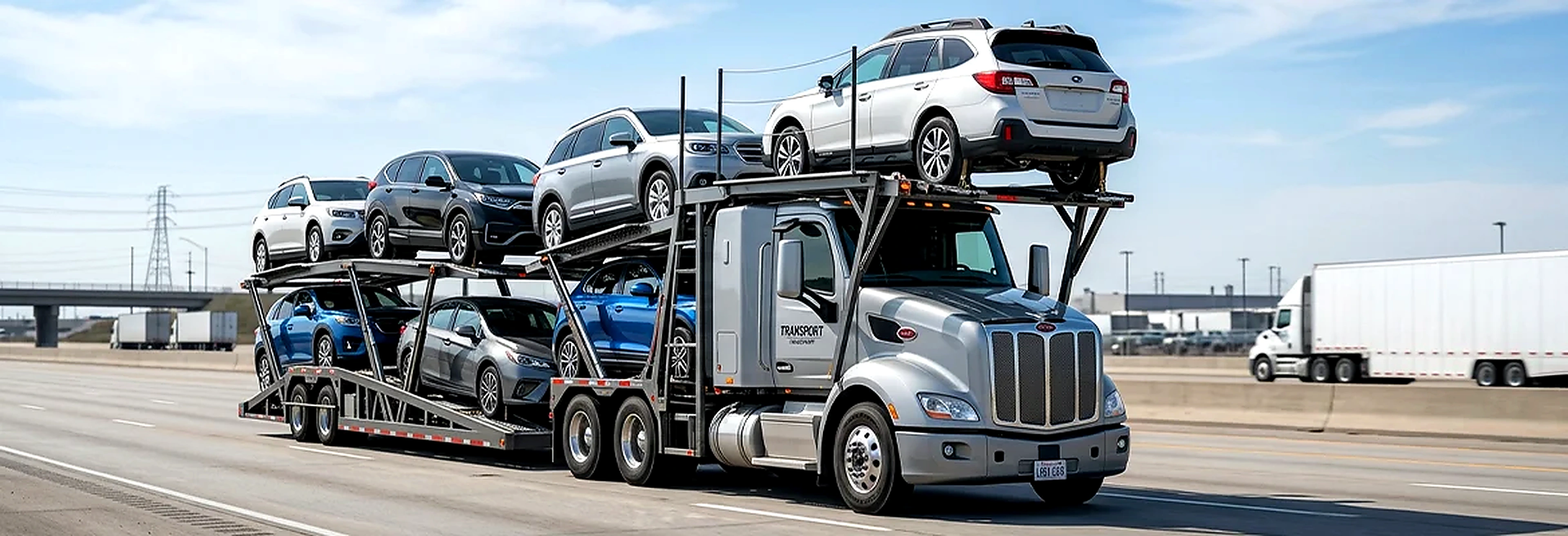
As with any vehicle, the driver should use appropriate loading and securing procedures. Tell the transport coordinator the exact model, modifications, operability, and any special handling concerns.
Open versus enclosed transport for a Tesla
Open transport is widely used and is generally the more economical option. The vehicle rides on a multi-car carrier and is exposed to ordinary weather and road conditions.
Enclosed transport uses a covered trailer and offers additional protection from weather and road debris. It generally costs more and may have different availability. The best choice depends on your budget, route, vehicle value, and preferred protection.
Preparing your Tesla for pickup
- Follow Tesla's current owner-manual instructions for transport and vehicle settings.
- Ensure the battery has sufficient charge for loading and unloading; ask the coordinator for any carrier-specific guidance.
- Disable features that could unnecessarily drain the battery if appropriate for your model and transport instructions.
- Remove personal items from the cabin, frunk, and trunk.
- Secure the charging port and remove loose accessories.
- Photograph the vehicle from multiple angles and document existing damage.
- Provide the key or key card and tell the carrier about any operating limitations.
Timing and cost factors
Transit time depends on route distance, pickup window, carrier availability, weather, and season. Pricing can be affected by distance, transport type, vehicle weight, pickup access, and current demand. No general estimate can replace a route-specific quote.
Choosing an EV transport provider
Ask whether the assigned carrier is equipped for your vehicle, verify applicable company and carrier credentials, review cargo coverage terms, and confirm how updates will be provided. You can request an estimate through the Superior Auto Shipping quote form.
Frequently asked questions
Should I charge my Tesla before shipping?
It should have enough charge for loading and unloading. Follow your vehicle manual and the carrier's instructions for your model and shipment.
Is open transport an option for a Tesla?
Open transport is commonly used for many vehicles, including EVs, when the carrier can safely accommodate the model. Enclosed transport may be preferred by owners who want additional protection.
How long does Tesla shipping take?
Timing varies with distance, route, carrier availability, weather, and pickup arrangements. Request an expected range for your specific shipment.
Understand the vehicle's transport settings
Electric vehicles have model-specific instructions for towing, loading, transport mode, battery management, and key access. Read the current owner documentation for your exact model and year before pickup. Do not rely on generic instructions for a different Tesla model or software version. If the vehicle cannot enter the requested transport setting, tell the coordinator before a carrier is assigned.
Share whether the car is operable, whether it has a low battery, and whether any warning messages or damage affect movement. A carrier may need working steering, braking, and rolling capability to load a vehicle normally. If it is disabled, disclose that condition so appropriate loading equipment can be considered.
Consider ground clearance and vehicle dimensions
Some electric vehicles have low front splitters, underbody components, or modified suspension that require extra care around ramps. Aftermarket wheels, body kits, lowered ride height, and roof accessories can change the vehicle's dimensions. Provide accurate details and photos when requesting an estimate. Never assume a standard loading angle will suit a modified vehicle.
Choose a carrier based on your priorities
Open transport is a common choice for many operable electric vehicles and is generally the lower-cost option. Enclosed transport offers a covered environment and may appeal to owners of high-value, limited-edition, or newly restored vehicles. Ask about the equipment, handling approach, carrier coverage, and expected schedule rather than treating one method as universally best.
EV handoff checklist
- Review the current owner's manual and model-specific transport instructions.
- Confirm the vehicle can roll, steer, and brake as required for loading.
- Tell the coordinator about battery level, warning lights, modifications, and clearance.
- Remove loose charging cables, personal items, and removable accessories.
- Photograph the wheels, glass, bumpers, body panels, and underbody concerns.
- Provide the required key or access method and explain any special operating steps.
- Inspect the vehicle with the driver at pickup and delivery.
These steps help the carrier understand the vehicle before dispatch and give both parties a shared record of its condition. For model-specific operating instructions, always defer to Tesla's current documentation.
These steps help the carrier understand the vehicle before dispatch and give both parties a shared record of its condition. For model-specific operating instructions, always defer to Tesla's current documentation.